
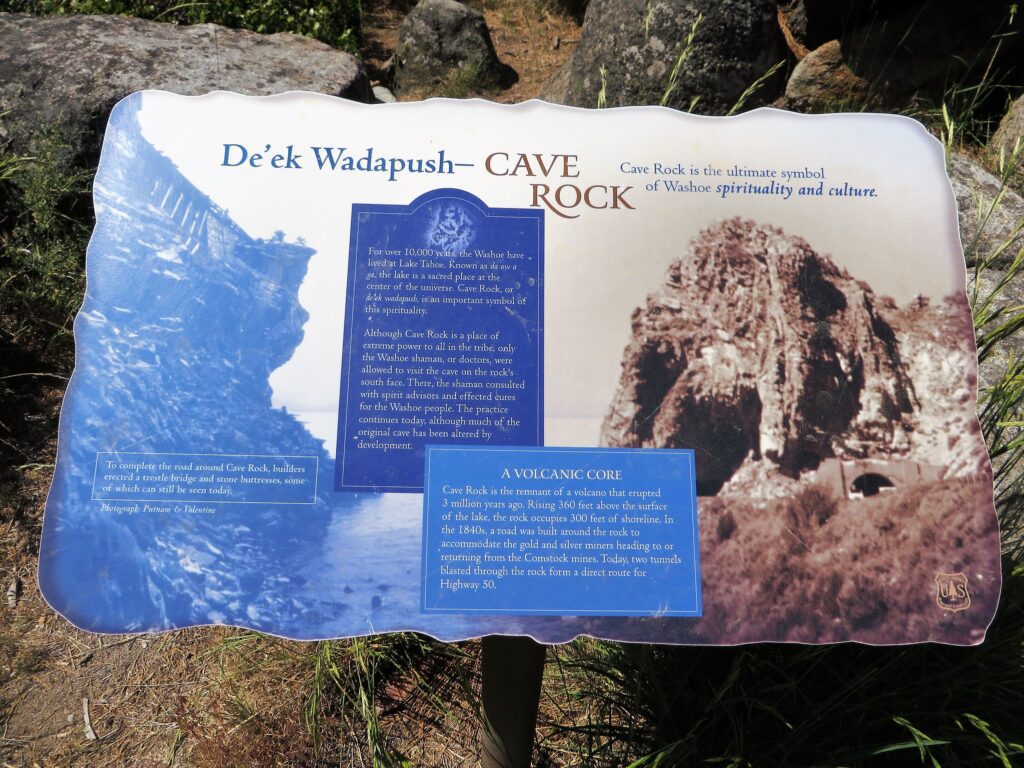
This is a rare instance when the U.S. government argues on behalf of the Native request for preservation of sacred sites. It is important to note, however, that the issue that was brought before the 9th Circuit Court was already a compromise, not a direct representation of Washoe wishes. According to the Court, “the Washoe Tribe favored an alternative that would have precluded all activities inconsistent with traditional Washoe belief. This alternative would have denied non-Washoe access to the traditional cultural property and banned hiking and other recreational uses at the rock.” The Forest Service intervened and said that while they were unwilling to close the area to the public entirely, they would prevent the direct contact and defacement of the rock that sport climbing involves. The Washoe did not necessarily agree, but they relented and did not press the case themselves against the Forest Service.
The Washoe view the decision as a small victory in a larger struggle for the return of their ancestral lands around Lake Tahoe. Notice that the Washoe are not present in any of these proceedings because the land is not considered theirs. The Forest Service decided to respect some of their wishes for exclusive access, but a fuller acknowledgement of the sacrilege would involve returning the land to the Washoe tribe rather than keeping it as a public park that Washoe are allowed to visit along with everyone else.
