
Conclusions
While this is certainly about the relationship between the telescope, the environment, and the people who hold it as sacred, at its core lies a larger question of sovereignty. Whose land is this? Who gets to decide what happens to it? Those are the major questions that have kept the controversy alive for years. In this case, the Hawaiians have a particularly strong argument because they used to be a recognizable nation-state that was annexed by the US in 1898. The history of Hawai’i is not one of treaties and negotiations. Instead, it is a story of sugar-planting settlers’ intentional overthrow of the monarchy that governed the islands. Once the colonial-friendly government was established in 1893, the path toward statehood was well paved. Essentially, Native Hawaiians want that autonomy back. They fly the state flag upside down, calling for Governor David Ige’s impeachment and calling for the return of the lands, or at least of Mauna Kea. On the other hand is the state of Hawaii saying they are just a group of minority dissenters whose demands for the return of ceded lands will not be acknowledged.
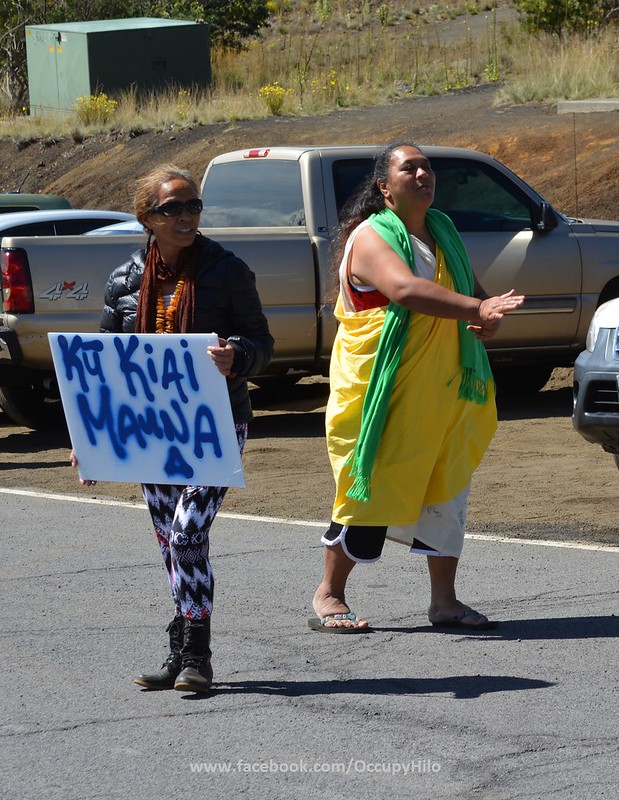
At the moment, both sides are locked into their positions and do not know how this will end. The government of Hawai’i extended the deadline for construction until September of 2021, which the kia’i take as a small step on their way to victory. The TMT group has identified a backup site for the telescope on the Spanish Canary Islands, though it remains unclear if that will go forward. As long as the TMT retains the support of the government, they will continue to get the official clearance that they need to build. The only thing stopping them are the kia’i using their bodies to obstruct access to the peak, fighting for Mauna Kea as the sacred site that they wish to preserve for the future.
