
Native Americans fought this restriction, citing the availability of Christian rituals, priests, and rabbis in prisons. However, many prison chaplains and administrators have noted the benefits for inmates’ rehabilitation and have been vocal advocates for sweat lodges to the community of correctional workers and administrators.1Associated Press, “Prisons offer sweat lodges to Indian inmates,” NBC News online, May 29, 2007, http://www.nbcnews.com/id/18925071/ns/us_news-life/t/prisons-offer-sweat-lodges-indian-inmates/#.XyB5U55KhPY.
Indeed, many experts have begun to utilize the sweat lodge as a kind group therapy for Native and non-Native youth in reform programs. The author of “Sweat Therapy” from The Journal of Experimental Education notes many important benefits of using sweating as a medium for group therapy. Specifically, the author praises the process as being a “challenging experience while promoting therapeutic factors beneficial to group psychotherapy” and cited evidence that it “promoted moral-cognitive development, and fortified cultural identity.”2Stephen A. Colmant, Rod J. Merta, “Sweat Therapy,” Journal of Experiential Education 23, no. 1 (2000): 31-38, https://journals.sagepub.com/doi/10.1177/105382590002300106.
These findings are significant in supporting a secondary claim by advocates of sweat lodge use in prison, that it is a constructive and beneficial process to all parties involved in the correctional system. According to the Navajo Nation Corrections Project,3Native Nations Institute, Navajo Nation Corrections Project, accessed July 28, 2020, https://nnigovernance.arizona.edu/navajo-nation-corrections-project. the potential for encouraging healthy growth of prisoners is tremendous, as is the potential for asserting the rights of all citizens to religious freedom. Importantly though, many advocates hasten to point out that the sweat lodge is not solely religious in nature: it is, like so many facets of Native American religious traditions, also a practice promoting health, hygiene, and general well being, with meanings that are as cultural as they are religious.4Frank Hopper, “The Tribal Sons: Spiritual Resistance in the Belly of the Beast,” Indian Country Today online, September 2, 2017, https://indiancountrytoday.com/archive/the-tribal-sons-spiritual-resistance-in-the-belly-of-the-beast-CKkCm1t5w0up4TqgA-rfaQ.
Two federal acts play an especially helpful role in legal battles for access to sweat lodges in prisons: the Religious Land Use and Institutionalized Persons Act (RLUIPA) and the Religious Freedom Restoration Act (RFRA).
RLUIPA provides as follows:
Protections for Native Spiritual Practices in Prison by NARF5Native American Rights Fund, Protections for Native Spiritual Practices In Prison, March 2014, 2, https://www.narf.org/wordpress/wp-content/uploads/2014/12/2014-03-xx-FINAL-Prison-Guide-00041641x9D7F5.pdf.
No government shall impose a substantial burden on the religious exercise of a person residing in or confined to an institution… unless the government demonstrates that imposition of the burden on that person—
(1) is in furtherance of a compelling governmental interest; and
(2) is the least restrictive means of furthering that compelling governmental interest.
RFRA provides as follows:
Government may substantially burden a person’s exercise of religion only if it demonstrates that application of the burden to the person —
(1) is in furtherance of a compelling governmental interest; and
(2) is the least restrictive means of furthering that compelling governmental interest.
Defining “substantial burden,” “governmental interest,” and “religious exercise” then become the grounds on which some of these legal battles are waged.
Significant Legal Cases Concerning Sweat Lodges in American Prisons
Darrell Keith Rich v. Jeanne Woodford (2000)
Darrell Keith Rich, also known as Darrell Edward Young Elk, was “sentenced to death for the sexual assault and murder of four young women between June and August of 1978 in the Sacramento Valley, California.”6Rich v. Woodford, 210 F.3d 961 (2000). Rich was executed in San Quentin State Prison on March 15th, 2000. Just a week before, on March 8th, Rich requested to participate in a sweat lodge ceremony before his execution date. He was denied on March 13th. Officials from the San Quentin State Prison upheld that since Rich was a “death row inmate,” he was held under the strictest level of supervision in the prison.7Rich v. Woodford, 210 F.3d 961 (2000).
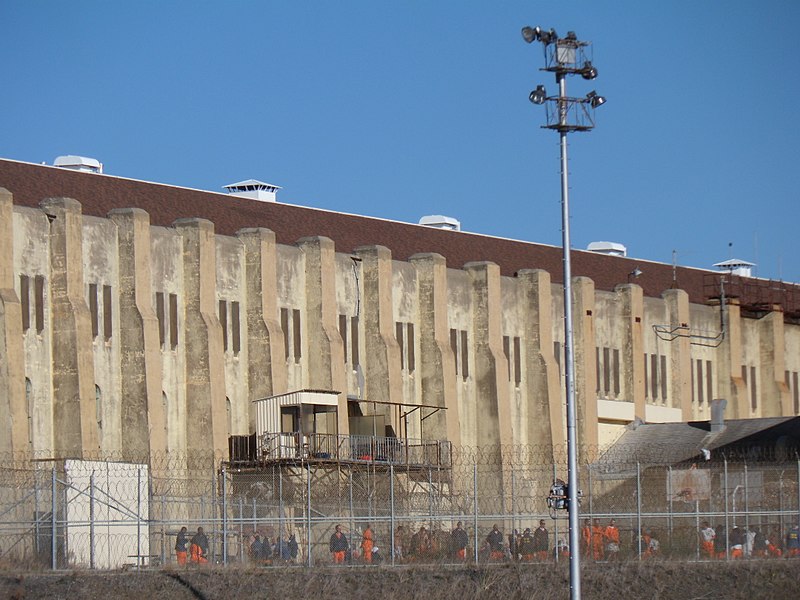
Throughout his time in prison, Young Elk was a model inmate, not causing any problems for guards or his fellow prisoners. He was never a danger to anyone in the prison and showed remorse for his actions every day. Also during his time in prison, Young Elk studied his Cherokee heritage, of which he previously knew very little. He began to learn to write and speak the Cherokee language and began seeing a spiritual advisor. He learned of the significance of the sweat lodge and its physical, emotional, and spiritual healing properties. San Quentin State Prison, where Young Elk was incarcerated, had a sweat lodge on the premises, as did 95 other prisons across the country, which had been used by Native American inmates for sweat lodge ceremonies since the 1980s. When Young Elk petitioned the prison authorities to participate in sweat lodge ceremonies, he was denied because he was a death row inmate not integrated into the rest of the prison population.8Rich v. Woodford, 210 F.3d 961 (2000).
Under maximum security, prisoners at San Quentin “remain under direct and constant supervision and stay within the confines of their housing units. They may not participate in religious ceremonies that require removal from those units.”9Rich v. Woodford, 210 F.3d 961 (2000). Rich was unable to get his request fulfilled as sweat lodges and sweat lodge ceremonies are considered to have religious significance to many Native American tribal nations. Additionally, prison officers commented that allowing Rich to participate in a sweat lodge ceremony would require more effort and security to accommodate his wish and would be considered too much work. They would have to escort Rich through the prison grounds filled with the majority of the prison population, who could present a danger to Rich’s safety. However, in his dissent, Circuit Judge Reinhardt countered that preparing an inmate for execution requires a similar amount of work in the days leading up to an execution. Furthermore, it is possible to not conceive of Rich’s request as a “religious ceremony,” but rather as a “pre-death purification through a sweat lodge ceremony,” which would fall under Rich’s constitutional rights to have before he was executed. Circuit Judge Kozinski concurred, stating that though Rich deserved to die for the level of crime he committed,
no man should be sent to his Maker without being allowed to take the spiritual steps he considers necessary to prepare for the event.
Judge Kozinski
Depriving Rich of the spiritual ceremony he wished for before his execution was ignorant and unconstitutional.10Rich v. Woodford, 210 F.3d 961 (2000). The ruling in Rich’s favor, posthumously, affirmed the religiousness of sweat lodges especially in the case of what kinds of religious ceremonies matter to inmates.
Trapp v. DuBois (2003)
This issue of not being able to gain access to a sweat lodge through prison regulations is presented again in Trapp v. DuBois, filed in 2003 in the Massachusetts Appeals Court. The Native prisoners felt that their right to free religious exercise was not respected by prison authorities. For example, traditional items were classified as contraband and Native people who were not members of recognized tribes were not allowed to participate in spiritual circles. Although lower court rulings on the case favored the Department of Corrections, this settlement was reached with prodding from the Massachusetts Appeals court.11Trapp v. Dubois, 95-779 (MA State Court 2003).
The judges expressed considerable doubt about the validity of the trial court decision and the total ban of the Lodge in Massachusetts prisons. At the conclusion of the argument, the court stated it would stay its decision for 14 days, to allow time for the Department of Corrections to initiate settlement negotiations with the appellants; failing that, the court indicated it would rule in favor of appellants.
Peter d’Errico12Peter d’Errico, “Native American Indian Spiritual Freedom in Prison,” UMass, accessed July 28, 2020, https://www.umass.edu/legal/derrico/trapp/.
Faced with the prospect of losing the case in the appeals court, the Department of Corrections chose to settle the case out of court. Under the terms of the settlement, “Purification Lodges will be constructed and operated at the North Central Correctional Institution, Norfolk, and the Souza-Baranowski Correctional Center.”13Settlement Agreement, Massachusetts, March 2003, https://www.umass.edu/legal/derrico/trapp/settlement.html. The agreement also included specific guidelines and procedures for the construction and operation of the sweat lodges, including stipulations that a sweat ceremony is held once a month. This settlement agreement is a comprehensive document that lays a solid groundwork as an example for sweat lodge disagreement resolution that could be applied effectively in other cases.
Yellowbear v. Lampert (2014)
Andrew Yellowbear will likely serve the remainder of his life in prison for murdering his daughter. A member of the Northern Arapaho Tribe, Yellowbear has turned to the practices of his nation to find stability within the chaos of his new life behind bars. It is for this reason that he seeks access to the prison sweat lodge, “a house of prayer and meditation the prison has supplied for those who share his Native American religious tradition.”14Andrew J. Yellowbear, Jr., v. Robert O. Lampert, Director, Wyoming Department of Corrections, 741 F.3d 48, No. 12-8048 (10th Circ. 2014). However, the prison refused to grant him access. In a case similar to that of Rich v. Woodford, Yellowbear was placed within a higher-security area of the prison grounds and prison officials deemed that it would not be productive or a good use of prison resources to provide officers to escort Yellowbear to and from the location of the sweat lodge, also located within the realm of the general prison population. Yellowbear disagreed. He filed under the Religious Lands Use and Institutionalized Persons Act (RLUIPA), which “protects individuals, houses of worship, and other religious institutions from discrimination in zoning and landmarking laws.”15Andrew J. Yellowbear, Jr., v. Robert O. Lampert, Director, Wyoming Department of Corrections, 741 F.3d 48, No. 12-8048 (10th Circ. 2014).
In order for his filing to be successful in the court of law by RLUIPA, Yellowbear must demonstrate that his “religious exercise [was] substantially burdened by prison policy,” (emphasis added) which can then be increasingly complicated by whether or not his practices are determined to be “religious exercises,” when taken into account the United States’ definition of a religious exercise and what it consists of.16Andrew J. Yellowbear, Jr., v. Robert O. Lampert, Director, Wyoming Department of Corrections, 741 F.3d 48, No. 12-8048 (10th Circ. 2014). Luckily, RLUIPA “protects any exercise of a sincerely held religious belief,” which includes Yellowbear’s observance of the beliefs held by his tribe. Additionally, he was able to prove that not being able to access a sweat lodge while in prison imposed a “substantial burden” on his religious exercise, due to the significance and purification roles of the sweat lodge, and the fact that Yellowbear needed access, but the prison refused to provide any, fully preventing the exercise of religion.
Following these deliberations, the panel of judges ruled that Yellowbear did in fact substantially prove that using the prison sweat lodge is an aspect of his religion and that he would experience a significant burden from not being able to practice this specific element of his religious practice. Furthermore, the court also ruled that the prison did not meet government standards for disallowing religious practices.
