
Before the land was reappropriated by the city of Mendota Heights, two individuals privately owned approximately eight and a half acres of Pilot Knob. These private investors tried for at least twelve years to sell the land to a developer. The Mendota Heights City Council had the land zoned for housing.
Complying with zoning regulations, the private owners tentatively sold their eight and a half acres to Minnstar Builders, Inc. for 1.65 million dollars to develop a 157-unit townhouse subdivision. In November 2002, Minnstar proposed this development to the Mendota Heights Planning Commission.
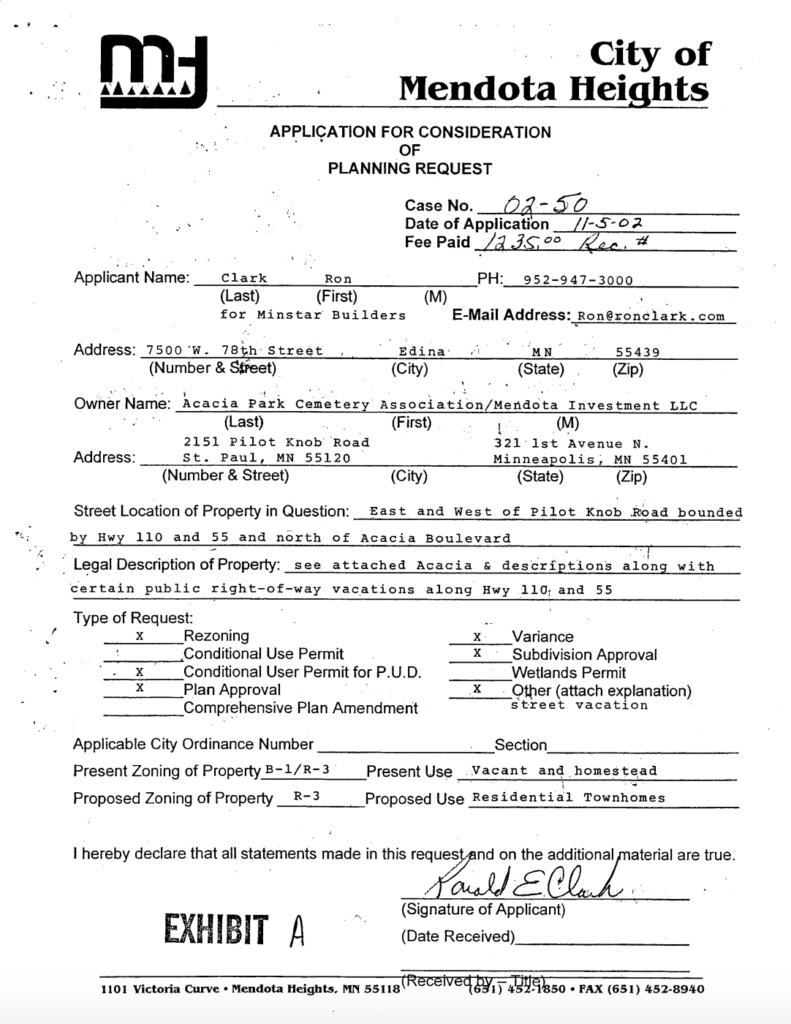
One month later, members of the Mendota Mdewakanton Dakota Tribal Community (MMDTC) approached members of the Beth Jacob Congregation, a Conservative synagogue in Mendota Heights only one mile from Pilot Knob, asking for their help in opposing the development.
According to one congregation member, disturbing the burial grounds of anyone is inconsistent with Jewish teachings, motivating the congregation to get involved. Another member of the Social Justice Committee said that he felt motivated to support the MMDTC because of their shared identity as religious minorities in Mendota Heights that have to cooperate to protect their sacred places. The congregation’s Social Justice Committee, which addresses issues of social justice in the immediate community, decided to spearhead the congregation’s action supporting the MMDTC. Both the Social Justice Committee and the Congregation’s Board of Directors wrote letters to the City Council supporting protection of this sacred site.1Brown, Curt, “Is Pilot Knob Too Historical and Sacred for New Townhouses?” Minneapolis Star Tribune, February 23, 2003. http://www.eagancoregreenway.org/recent_news/Mendota_Strib_23Feb03.html
Thus was born a multi-faith, multi-ethnic organization dedicated to preserving Pilot Knob. In September, they incorporated the Pilot Knob Preservation Association (PKPA). In February 2004, the PKPA compiled The Oȟéyawahe/Pilot Knob Burial Register and presented it to the City Council to impress upon the Council the idea that the bluff is indeed a cemetery that must be left undeveloped.2http://pilotknobpreservation.org/wp/?page_id=78
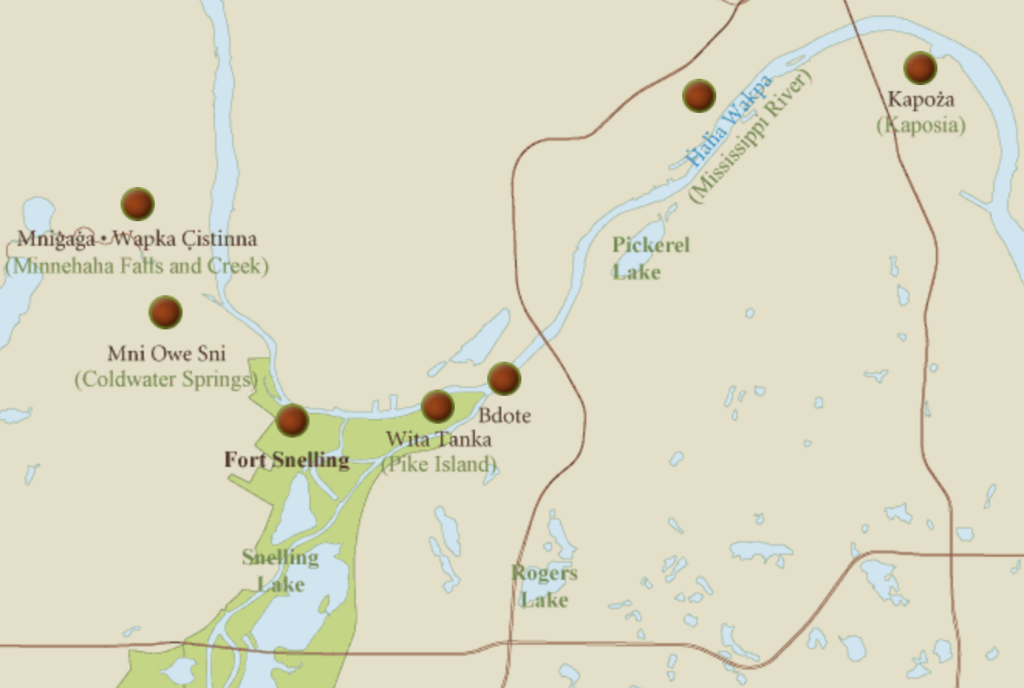
The Council then unanimously voted to order the developer to pay for an Environmental Impact Statement. An EIS would cost the developer more than $100,000.
Minnstar legally had thirty days to contest this ruling in court, but it did not. Minnstar wanted to avoid such costs, and on January 29, 2004, sued the city of Mendota Heights, asking the judge for a writ of mandamus to order the council to approve the development and award damages. In May 2004, however, the judge overseeing the case decided in favor of the petitioners, denying the company’s claim. If Minnstar wanted to develop the land, it would have to pay for an EIS.
