
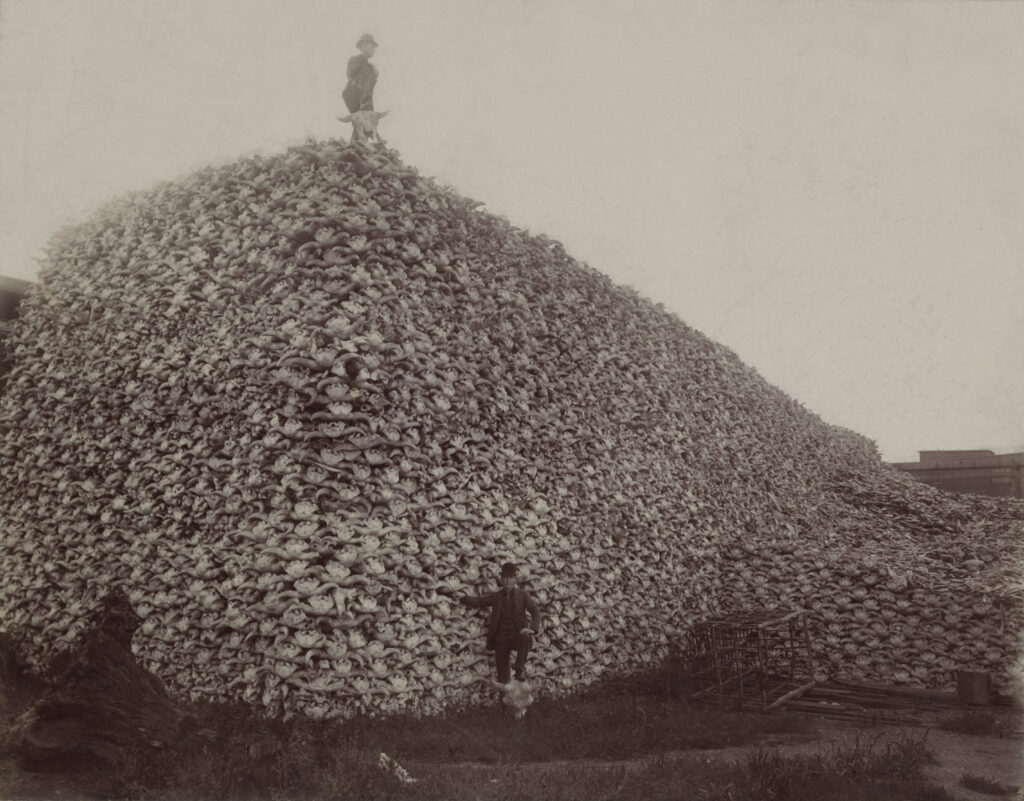
Brucellosis is a contagious disease that can cause stillbirths, infertility, and decreased milk production in cattle. Originally, the disease was transmitted from cattle to wild buffalo and elk herds of the Greater Yellowstone Area. Recently, though, concern has shifted towards the bison as the most dangerous carriers of the disease. In 1984, the Montana Fish and Wildlife Commission began a practice of culling, when game wardens killed bison with the intent of preventing the transmission of brucellosis to nearby herds of domestic livestock. All the bison that left the Park, infected or not, were slaughtered.
Culling is still a primary way of dealing with bison that wander off of federal lands into the neighboring towns. They are viewed as both a disease risk and a nuisance in developed areas. In 2020, over 700 animals were culled from the park.
This practice is opposed by many environmental groups like the National Wildlife Federation (NWF), who see bison as essential to the native ecological landscape of the Yellowstone area. It is also opposed by the Native American advocacy groups who have worked in conjunction with the NWF on this issue.
In the face of such opposition, why do the government and national parks officials continue a practice that critics considered indiscriminate slaughter? The primary reason given by The Montana Department of Livestock (DOL) is the DOL’s commitment to keep brucellosis out of the state, even if it takes animal slaughter. Many opponents point out that no transmission of brucellosis from buffalo to cattle has ever been documented, but the DOL still says they are unwilling to take any risks.
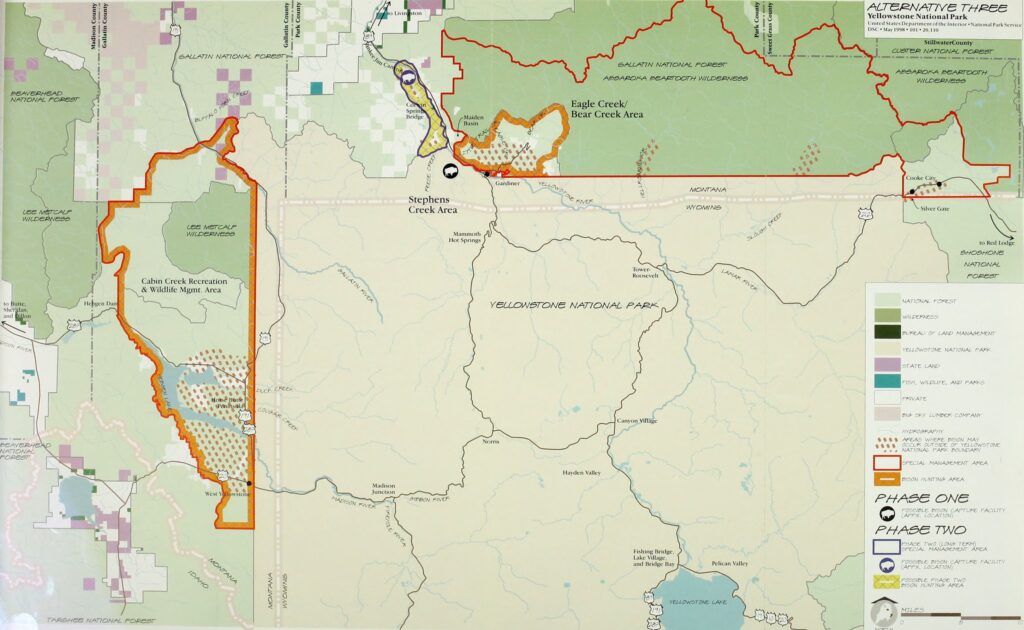
The ranchers who oppose proposals to manage public ranch lands in ways that “privilege” native plants, and animals often cite encroachment on their economic livelihood. Ranching is not only the state’s largest industry, but also a central part of Montana’s cultural identity and thus wields considerable influence in the Montana State Legislature.
This led to a 1995 decision to give the Montana Department of Livestock the authority to manage the brucellosis issue. They returned to culling. The influence of this lobby is also evident in what would seem to be a double standard in the state’s grazing rights leasing policy. Yellowstone is unwilling to stop leasing out grazing rights to cattle ranchers on lands where buffalo would roam, and yet it does not lease out grazing rights on lands where elk currently do roam. Buffalo cannot be legally hunted due to their vulnerability and small numbers, whereas elk are ‘fair game’ to hunters and thus generate substantial revenue.
Native Americans and environmentalists have suggested several alternatives, the rejection of which suggests the manipulation of political power by those in favor of the killings.

