Controversy over land use
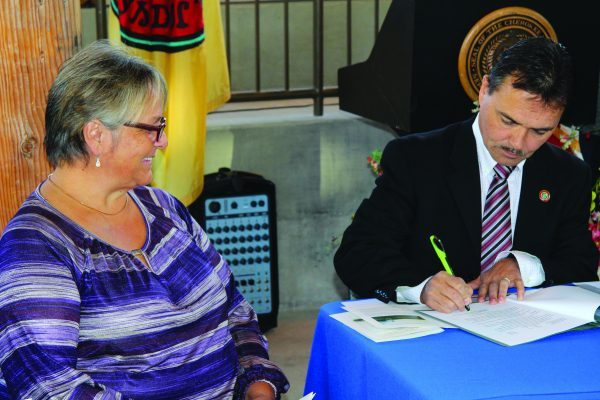
When the opportunity arose in 1996, the Eastern Cherokee decided to buy back their land after nearly 165 years without it. Under the leadership of Chief Joyce Dugan, the tribe used profits from its small-scale casino to purchase the plot for 3.5 million dollars.
This was a great victory for Cherokees across North America, though it sparked a debate within the community about what to do with the land. Because the cost was so high, many people, including some members of the EBCI, were frustrated by the prospect of keeping it there “just to look at.” They thought the site should be used to promote economic advancement. Proposals for development have included tourist attractions such as a train depot, culture center, Indian resort, walking trail, tourism project, golf course, and even a NASCAR track. Cherokee Tribal Council member Larry Blythe was one in favor of using the space for non-traditional purposes and had spear-headed the idea of golf course development. He and others felt that development could be designed around the most sacred areas at Kituwah.
Leaders needed to figure out how to balance economic needs with the need to preserve the sacred nature of the land. Many believed that the land should remain absolutely untouched and that the possibility of development is out of the question.
“We need to preserve Kituwah because it was the mother town. We’re searching to find a way to preserve it without digging it up. To me that’s a very sacred place. It’s a very peaceful place. If you ever go there, you can feel the peace. The spirit that was there a long time ago is still there.”
Marie Junaluska, Cherokee Tribal Council member and Cherokee language specialist
One of the greatest motivators was the speculation that the mound was home to ancient burial sites. Tipped off by a nearby gardener who saw some fractured bones in a groundhog’s hole in 2001, those concerned that any development of the Kituwah Mound site would damage its spiritual and cultural significance commissioned archaeologists to dig over a thousand tiny test holes. After this first investigation, they found 15 burials. Although this archeological investigation did not determine the precise fate of the land at Kituwah, it has been tremendously important in demonstrating the site’s cultural significance. This discovery has encouraged many people who were initially pro-development to view Kituwah as a visible and tangible connection to their cultural and religious history and cemented the preservationists’ conviction that a high-impact construction project would damage the historical and religious significance.

In 2013, the EBCI passed a resolution designating the Kituwah Mound as a “sacred site” with the intent to “keep development at bay…for perpetuity.” [citation] The resolution recognizes Kituwah as the locus of “not only the remains of our ancient ancestors, but the sacredness of all that existed in our past, as well as all that it embodies for future generations.” The United Kituwah Band of Cherokee Indians affirmed the resolution and recognized Kituwah Mound a “traditional cultural property” using language that echoes that of the Native American Graves Protection and Repatriation Act (NAGPRA).
Duke Energy agreement
Several years later, the Kituwah site was at the center of another major controversy involving Cherokee cultural heritage and big business.
In 2009, repairs made on a Duke Energy power line sparked a fire that burned for a week and destroyed at least 2,300 acres of EBCI tribal forest in Western North Carolina. That same year, Duke Energy began clearing a site overlooking Kituwah Mound as part of their plan to build a $52 million dollar electrical substation on the site.
Duke neglected to consult tribal leaders and local citizens about the impact this development would have on this sacred historical site. The EBCI, the Cherokee Nation, and the United Kituwah Band all felt that maintaining the scenic view of the green mountains surrounding Kituwah Mound was just as important as the mound itself. They argued that clearing a large swath of trees in order to build an industrial structure near the mound would weaken the spiritual experience at Kituwah.
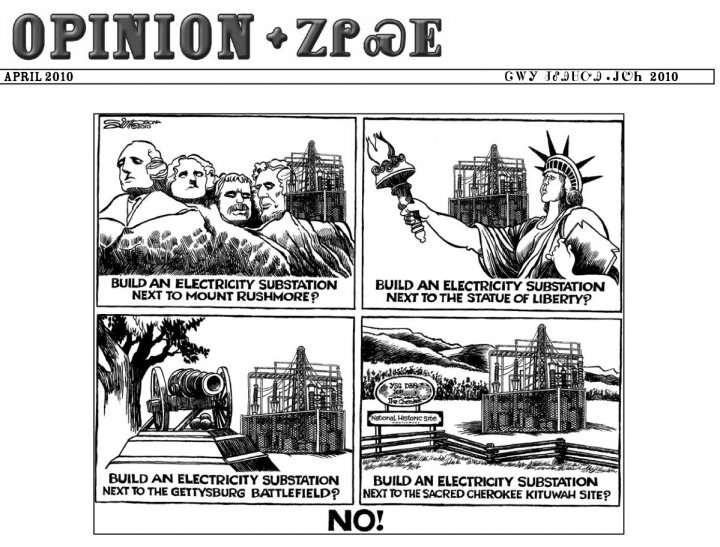
The Cherokee organized a grassroots movement, SAVE KITUWAH, to speak out against the proposed development and protect the natural beauty of the site. They lobbied local representatives and company officials and launched advertising campaigns to raise awareness of the issue among the non-Native public.
Eventually, this group of citizens dedicated to their cause had an effect on a corporation much larger than them. In 2010, Duke Energy decided to build the substation elsewhere. This was a major victory for cultural preservation and tribal rights, and a testament to the power of grassroots organizing. In 2016, Duke Energy agreed to pay $1.7 million and transfer 35 acres of land near Kituwah to the Eastern Band of Cherokee Indians in a settlement of the 2009 fire. This settlement agreement was a big step towards bringing lands back under indigenous ownership and ensuring the future protection of Cherokee sacred sites in Western North Carolina.