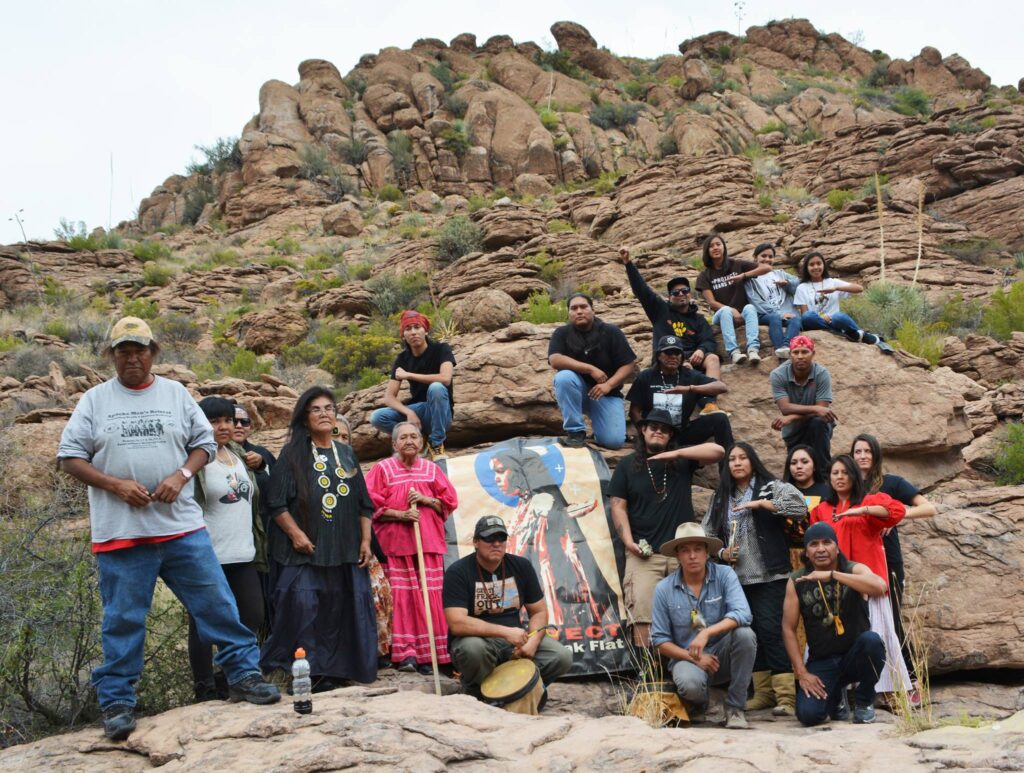
Though the future of Oak Flat, with corporate interests seeming to steamroll those whose spiritual lives depend on the land, looks bleak, there are some glimmers of a way out of the destruction. In January 2019, Representative Raúl Grijalva along with 39 co-sponsors and Senator Bernie Sanders along with 5 co-sponsors introduced the Save Oak Flat Acts to their respective chambers of Congress. Both acts call for the repeal of Section 3003, which grants the land to Tinto Mining.

Until the Save Oak Flat Acts get passed—and it is unclear whether they will before it is too late—the only thing possibly stopping the mine from going forward is the continued activism of the Apache people and their allies. In November 2019, Wendsler Nosie Sr., an Apache elder and founder of Apache Stronghold, announced that he was “going home” and ran on foot from the San Carlos Reservation to Chí’chil Biłdagoteel.1“I’m Going Home,” Apache-Stronghold, last updated November 2019. http://apache-stronghold.com/going-home.html He plans to camp on the land for the foreseeable future. Stronghold Apache continues to organize marches and rallies. For the time being, sunrise dances are still held at Oak Flat.
Already, the process of defending their sacred sites has been difficult, even detrimental, for the San Carlos Apache. When the EIS was being conducted, “Tribal monitors resurveyed or accompanied archaeological survey crews in those areas to identify TEKPs of importance to the four cultural groups with ties to the area (Puebloan, O’odham, Apache, and Yavapai)”. Disclosing the locations and meanings of sacred sites is costly to the spiritual person. Though it is usually not something that Native peoples are eager to do, in this case it was necessary to give outsiders an idea of what they would be destroying if they opened a mining pit in the area.
Furthermore, the land exchange that occurred in 2014 sets a dangerous precedent for other sacred sites within the U.S. Trust Property. It effectively creates a way to circumvent all the requirements that were put in place specifically to protect culturally and environmentally significant sites like Oak Flat. It sends the message to private companies that public parklands are available for their consumption if they can get the right support in Congress.
Support for the Apaches’ cause is growing, especially among environmental groups such as the Sierra Club. There is still a long way to go to repeal McCain’s rider, both in Congress and on the ground. It remains to be seen how much the persistent activism of the Apache people on behalf of their most sacred site can influence legislators and CEOs to preserve Oak Flat for the future.